Best Practice Guide · Free
How to Write a Project Status Report People Can Use
A short, clear snapshot that tells leaders what changed, what happens next, and where a decision or action is needed.
- Audience
- Project managers, program managers, PMO leaders, project sponsors, and new project leaders
- Outcome
- A concise, factual, leadership-ready status report
Use the checker after you have prepared a report to identify communication gaps before it reaches leaders.
Quick executive summary
A project status report is a snapshot, not a diary. It should help a busy leader understand the purpose of the work, what materially changed, what happens next, and where their attention can improve the outcome. If a reader has to reconstruct the story from meeting notes, milestone lists, and color codes, the report is not yet doing its job.
Write for the lowest common denominator: a capable person with no project background should be able to explain the report to their grandmother without inventing context. Use plain language, name the outcome, separate facts from hopes, and make ownership and timing visible. Concise does not mean vague.
The 10-Minute Status Report Standard
Start with an outcome-based description, not a project label. Weak: “Inventory platform upgrade.” Stronger: “Replace the legacy inventory platform so planners can see available stock sooner and reduce manual reconciliation.” The second statement tells a leader why the work exists and makes later changes meaningful.
Add the reporting date and a clear window: look back about two weeks and look ahead two to four weeks. A report with no timeframe cannot tell readers what is newly true, what is stale, or how soon they need to act. In ten focused minutes, a project leader can update the facts that changed, confirm the next commitments, and test whether the health statement matches the evidence.
What Every Good Status Report Includes
Purpose and meaningful progress
State the business outcome first, then describe progress in terms of a changed condition. Weak: “Held stakeholder meetings.” Stronger: “Confirmed the approval workflow with finance and operations; design sign-off is complete.” Meetings are activity. A completed decision, approval, deliverable, or reduced uncertainty is progress.
Forward action with ownership
Every important next step needs an owner and a date. “Continue testing” does not create a commitment. “Jordan Lee will complete integration testing by Oct. 10” does. Include the action that matters, who owns it, and when the reader should expect a result or escalation.
Material issues, risks, and decisions
Report an issue when it is affecting the work now; report a risk when it could affect the work later. For either one, describe the impact, current response, accountable owner, and decision or support needed. Make decision requests easy to find. Do not hide “decision needed by Friday” inside a paragraph about general progress.
Activity Log vs. Decision-Ready Report
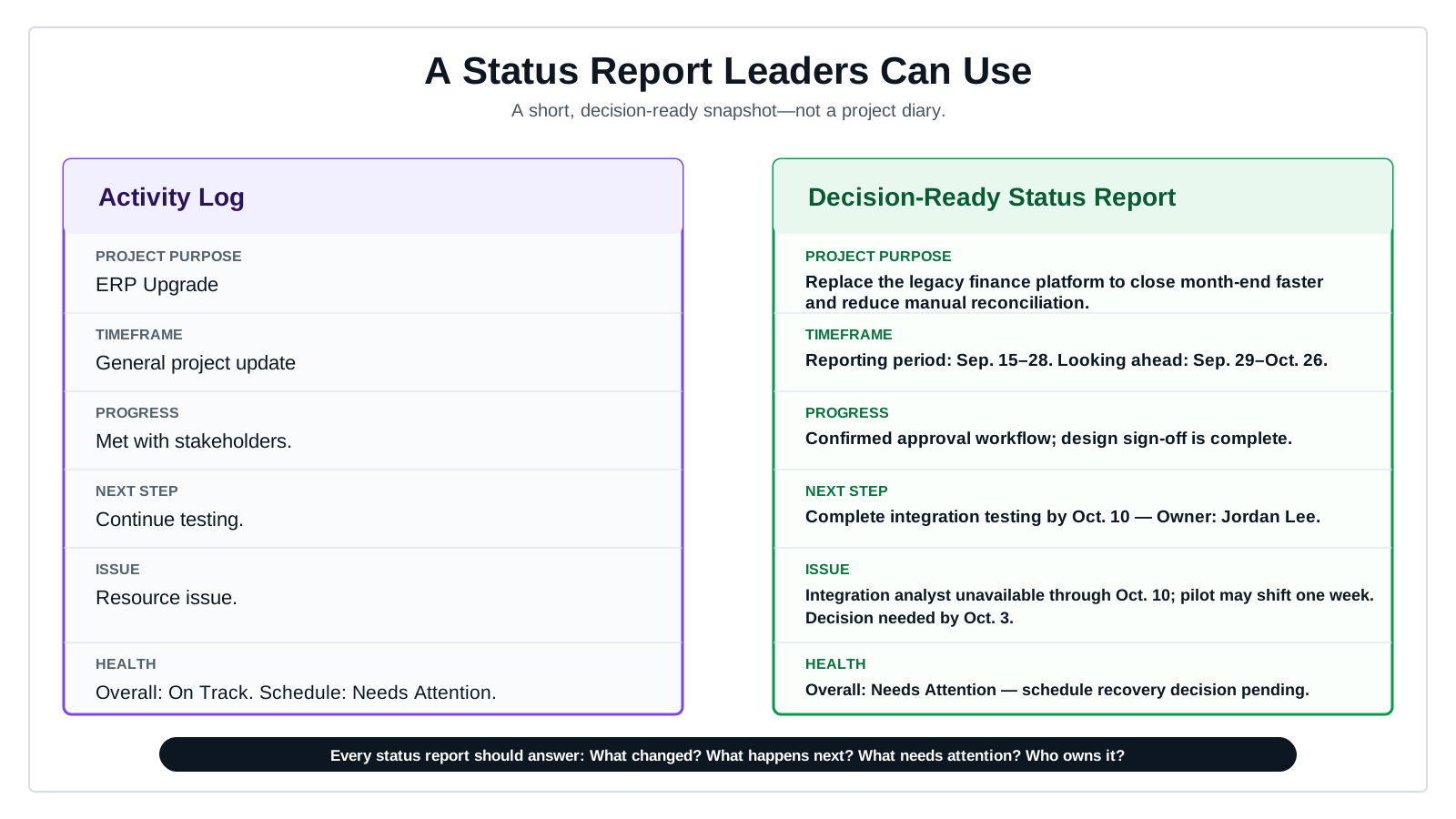
An activity log answers, “What did the team do?” A decision-ready report answers, “What changed, what will happen next, and what needs leadership attention?” Both have value, but they serve different readers. Teams may retain detailed delivery records elsewhere; leaders need the compact version that makes choices and consequences visible.
Use the comparison above as a practical editing test. Replace general statements with the decision, condition, deliverable, or evidence that changed. Replace generic next steps with a named owner and date. Replace labels such as “resource issue” with the specific constraint, likely impact, and support request. The report becomes shorter because the reader no longer has to ask basic follow-up questions.
How to Report Project Condition Honestly
Set the overall condition from the worst critical element, not from an average or a desire to reassure. If a schedule recovery decision is pending, overall health should not say “On Track” simply because budget and scope are stable. Say what the condition is and why: “Needs Attention — schedule recovery decision pending.”
Separate condition from trend. Condition is today’s state: on track, needs attention, or at risk. Trend explains direction: improving, stable, or worsening. A project can be “Needs Attention, improving” when a mitigation is working but not complete. That distinction prevents a single color from hiding an important story.
How to Write Updates With Context
Give every update enough context to stand alone. Name the reporting period, the relevant baseline, and the consequence of the change. “Testing slipped” is incomplete. “Integration testing moved from Oct. 3 to Oct. 10 because the analyst is unavailable; the pilot may move one week unless coverage is approved by Oct. 3” gives a leader an understandable choice.
Do not turn the report into a complete history. Use the lookback to capture only material changes and the lookahead to show the next two to four weeks of commitments, decisions, dependencies, and risks. Link to detailed plans or logs when they are needed, but keep the status report readable in one sitting.
Be Fair, Real, and Unbiased
Status reports can become political when they protect a preferred story, blame a person or vendor without evidence, or disguise uncertainty as confidence. Be factual and fair. Weak: “The vendor is causing delays.” Stronger: “The vendor’s interface specification was received six business days later than planned; the team is assessing the effect on integration testing and will confirm the revised forecast by Friday.”
The stronger update identifies an observable fact, avoids assigning motive, and makes the next evidence point visible. It also leaves room for the vendor’s response and for the team’s own dependencies. This is not softer reporting; it is reporting that leaders can trust and act on.
Final Review Checklist
- Can a non-project reader explain the project purpose in plain language?
- Does the report state its date, lookback period, and two-to-four-week lookahead?
- Is progress expressed as an outcome, decision, deliverable, or changed condition?
- Does every material action, issue, risk, or dependency have an owner and date?
- Does the overall condition reflect the worst critical element, with the trend stated separately?
- Are facts, assumptions, and opinions clearly distinguishable and fair to all parties?
- Is any decision or support request visible enough for a leader to act?
When the answer is yes, the report is ready for leaders. If the report still feels busy, remove activity that does not change the decision, action, risk, or outcome.
Frequently asked questions
How long should a project status report be?
Use the shortest report that gives leaders the purpose, meaningful change, next action, material risks or issues, health, and any decision needed. One concise page is often enough.
What is the difference between a project issue and a project risk?
An issue is affecting the project now. A risk is a possible future event or condition that could affect the project. Report both with an owner, action, timing, and impact.
Should an overall project status be green when one critical item is off track?
No. The overall condition should reflect the worst critical element. Explain the condition separately from the trend so leaders can see both the current position and whether it is improving or worsening.